August 2025 Distribution Strategy (Historical)


Update and correction — 20 July 2026: This article records a strategy proposed on 20 August 2025; it is not current operating documentation. Current programme mappings, GSI configuration and cadence, automation, and any separate liquidity activity must be confirmed against current operational records. See the distribution documentation for the published mechanism. The GSI paces release of pre-created ATTO and seeks lower expected volatility than a fixed release schedule. It does not create a peg, price floor or band, reserve, redemption right, guaranteed liquidity, or guaranteed price outcome. Any separate liquidity activity may change or pause and cannot control demand, external venues, or market events; ATTO may lose value or become illiquid.
Atto’s protocol has a fixed supply of 18 billion coins (all pre-minted), so consensus cannot create new ATTO. Coins nevertheless enter circulation through distribution programmes. In August 2025, the article described Folding@Home rewards of 5,000 ATTO per minute, or roughly 1.2% of total supply per month. With circulating supply then described as about 6%, the planned pace of about 15% of total supply per year would have been much larger relative to that circulating base—roughly 250–300% over a year, or about three times the amount then in circulation. The proposal treated that release as a way to bootstrap use while recognising the risk of additional selling pressure.
The August 2025 proposal framed this as a distribution dilemma: release coins quickly to encourage use, or slow distribution to limit potential selling pressure. It described two separate responses. The first was to pace distribution using market data. The second was possible liquidity activity, such as placing or withdrawing orders as conditions changed. This article does not establish whether that liquidity activity was implemented or is operating now. The proposal expected that the two approaches might reduce the amplitude of “boom–bust” swings, but that outcome was not assured.
How Price Forms and Why Volatility Hurts
At its core, price reflects supply and demand. If supply grows faster than demand, price may fall; if demand rises against limited supply, price may rise. The proposal assumed that pacing distribution could influence one part of this relationship. It could not control demand, external venues, or market events, and could not ensure a particular volatility or price outcome.
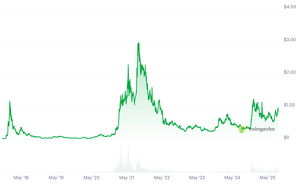
The proposal treated wide swings as a barrier for the long-term users and businesses it sought. Past altcoins provided cautionary tales: Dash’s price, for instance, surged almost 9,000% in 2017 (from ~$20 to an all-time high around $1,700) and then crashed over 90% in 2018. Nano (formerly RaiBlocks) rocketed from about $3 to $37 in a matter of weeks during 2017, then collapsed soon after. Cardano’s ADA similarly hit roughly $1.16 in early 2018 before plunging to ~$0.04 by year’s end. The charts were used to illustrate the kind of volatility the proposal sought to reduce: rapid spikes and crashes may attract short-term speculation while discouraging more cautious users.
The Proposed Distribution and Liquidity Levers
The strategy described two separate levers: distribution pacing and possible liquidity activity. Adjusting distribution could change the rate at which existing ATTO entered circulation; it could not balance supply and demand on its own.
Growth Stability Index (GSI)
The strategy proposed using the Growth Stability Index (GSI) to adjust distribution rates. The published design positions a market-price input on a scale from 0 to 1 based on:
- 7-Day Average Price (smoothed to reduce noise)
- All-Time High (ATH)
- 1-Month Low
The formula: GSI = (7-Day Average Price - 1-Month Low) / (ATH - 1-Month Low)
Key features:
- Target decreases: The design applies a lower target on the next update
- Target increases: The design caps increases at 0.01 per update
- Intended automation: The proposal described automated calculation and application; current production automation and cadence require operational confirmation
This asymmetry was intended to reduce covered distribution rates quickly after lower price readings and restore them gradually after higher readings. It does not protect holders against selling pressure or loss.
The proposal contemplated applying dynamic adjustment to mining, the faucet, and staking rewards. Current programme mappings must be confirmed from current operational records.
📜 Original Approach (Historical)
When the strategy was announced, the article said Atto used a simpler weekly adjustment system:
- Baseline: 5,000 Atto/min (Folding@Home)
- When price falls: For each full −1% over 7 days, cut one step: 5k → 4k → 3k → 2k → 1k → 500 → 250 → 100 (floor)
- When price rises: If 7-day change ≥ +1%, raise one step max
- Flat band: Between −1% and +1%, no change
- Timing: Weekly manual adjustments
The later GSI design used a broader market context (ATH and 1-month low). This article does not verify whether the earlier approach operated as described or whether the later design is currently automated.
Intended Role in Everyday Use
The strategy's stated purpose was to make ATTO more practical for everyday payments by seeking lower expected volatility than a fixed release schedule. Lower volatility was an objective, not an achieved condition or promise. ATTO's price and liquidity can still change sharply, and distribution pacing cannot create a narrow trading band or keep a holder's balance from losing value.
The proposal also treated possible liquidity activity as separate from distribution pacing. Neither activity could control demand, external venues, or market events, and neither could assure adoption or a price outcome.
Historical Strategic Shift
At the time, the announcement described a move away from aggressive promotions and giveaways toward more measured distribution and marketing. That was the strategy stated in August 2025, not evidence of current programme settings or operations.
In summary, the proposal sought to pace the release of pre-created ATTO through a dynamic distribution schedule. Any liquidity activity was a separate proposal whose current status requires evidence. Both were intended to support everyday use, but no reduction in volatility, liquidity level, adoption result, or ATTO value was guaranteed.